
What If You Collapsed Abroad? — A 6-Part Emergency Plan for Expats in the Philippines and Beyond
In one line
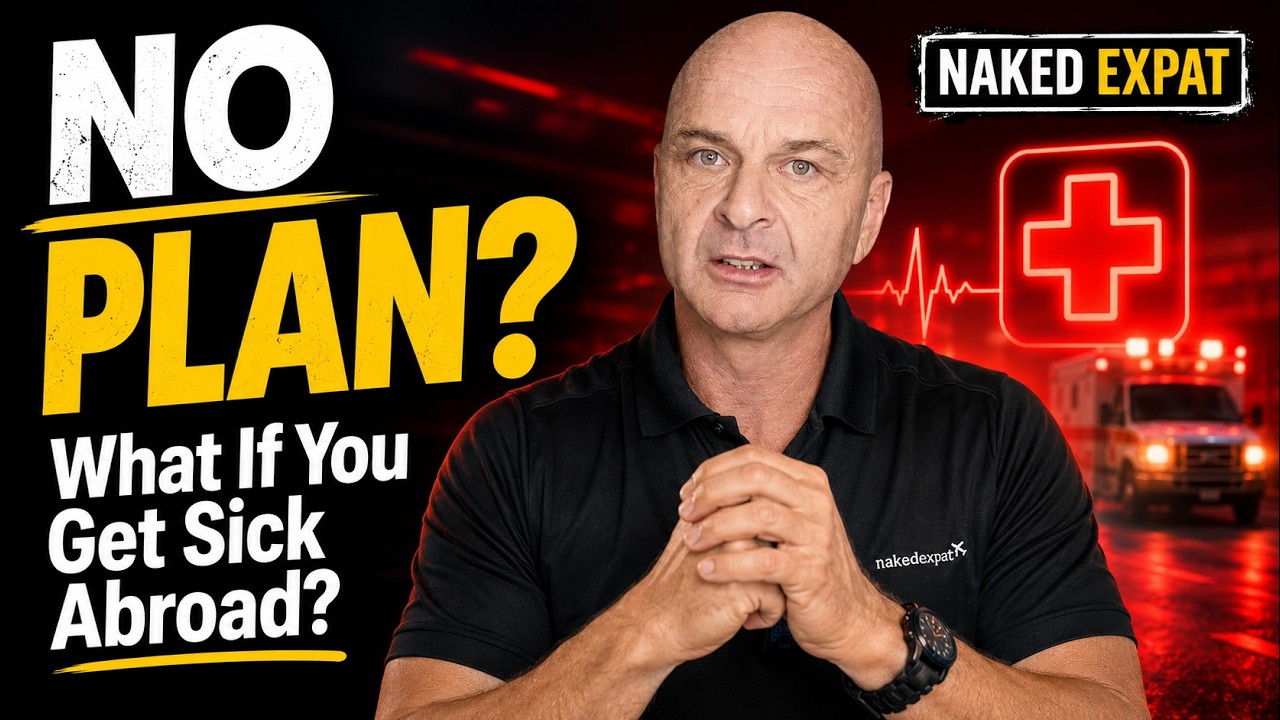
A host who says he has lived over 20 years across the Philippines, Thailand and Malaysia walks through six things to have in place in case you suddenly collapse abroad: international health insurance, a medical information document, emergency contacts, a will and power of attorney, an emergency fund, and knowing your nearest hospital. It is general advice for all expats, not specific to the Philippines.
💡 Key takeaways
[1. International health insurance]
• Your home country's public health cover (UK NHS, US or Australian Medicare, etc.) does not apply abroad.
• According to the host, serious care such as cardiac surgery at a private hospital in Bangkok can cost about $50,000–$70,000 or more, and a medical evacuation about $15,000 to over $100,000 depending on distance and aircraft.
• Travel insurance is built for short trips with a return date and has low limits, so he says it is not enough for long-term residents.
• He stresses checking the annual limit, inpatient cover, chronic condition management and, above all, whether medical evacuation is included.
• The host also promotes a partner insurance adviser.
[2. Medical information document]
• Put on one page: name, date of birth, nationality, blood type, current medications (name, dosage, frequency), drug allergies, surgeries, chronic or cardiac history, home and local doctor contacts, policy number and the insurer's emergency line, and your emergency contact.
• Keep it on your phone (emergency contact visible on the lock screen), as a wallet card, and as a paper copy at home.
• The ER doctor may not read English, so he says to have it in both the local language and English.
[3. Emergency contact and local trusted person]
• Decide in advance who will contact family, call the insurer's emergency line to start the claim, and make decisions if you cannot.
• Even with a partner, walk them through where the documents are, who to call in what order, and the insurance number.
• If you live alone, explicitly ask a local friend to be your local point of contact, and make sure family back home knows exactly where you live and how to reach you.
[4. Will and power of attorney]
• With assets in several countries, different inheritance laws can make settling things take years, he says.
• A partner you are not legally married to may be severely limited in inheriting anything without a will.
• Without a lasting power of attorney (naming someone to decide for you if you are alive but incapacitated), even close family may be unable to act, for example when accounts are frozen.
• An old will that your family doesn't know exists is useless, so tell them where it is kept.
[5. Emergency fund]
• Even with insurance there may be an excess, uncovered costs, and family flights and accommodation.
• Keep about three to six months of living expenses or more in an immediately accessible account (not investments), and check that the person who may need it can actually access it (transfer limits, details, authority).
[6. Knowing your nearest hospital]
• In islands and rural areas big hospitals can be far away, so know where the nearest facility with surgery and critical care is and how long it takes to get there.
• Register in advance with nearby private hospitals and clinics (insurance, history, blood type, emergency contact) so admission is faster in an emergency.
• Save your insurer's emergency number in your phone under a name you'll find instantly.
• If you have heart, diabetes or respiratory conditions, plan an emergency response with your doctor beforehand.
⏱ Chapters
00:00 The question nobody wants to answer
03:30 International health insurance
09:54 Medical information document
12:26 Emergency contacts and local trusted person
15:44 Will and power of attorney
20:11 Financial emergency buffer
23:03 Local medical intelligence
27:02 The 6-point checklist
💬 What viewers said (22 comments)
• Many viewers said they were saving the video to go through step by step.
• A retired medical professional who has lived in the Philippines and Thailand said Philippine health care is very substandard; the host replied that this is why he recommends international insurance with medevac.
• A viewer in Cebu asked what happens if he can't return his pension proof-of-life form himself; the host said a power of attorney for finances lets the attorney sign it.
• To a viewer planning a move to rural Philippines, the host advised not living too far from good hospitals and being financially careful in the first few years.
Saving this one to go through step by step. Gold.
Have you seen how granting power of attorney works for an old expat losing his mind? I've had the 'are you still alive' letter from a retirement agency and responding was fairly difficult. Within five years I may be unable to respond and could lose my retirement while still alive. I live in Cebu and hear of a lot of strange situations.
These documents also need to be kept updated when things change.


Comments 0
Please log into write a comment.