
The War in Ukraine.
It has been over four years since the war in Ukraine began. That's more than 625 days.
Looking back now, more than four years later, I believe Russia is indeed a formidable superpower, worthy of its second-place ranking in the world.
The unique reason for this assessment is undoubtedly its capacity for a protracted war.
Initially, everyone thought that the powerful Russia would sweep through Ukraine within a week and establish a pro-Russian government.
However, contrary to public expectations, Ukraine succeeded in its initial defense, prompting the West to begin its support. The war has now been ongoing for nearly four years.
To wage war, one must consider and decide on many things.
Economy, resources, food production, alliances.
And the cost-benefit analysis of these factors, and so on.
Russia could not afford to let Ukraine, its last bastion, fall, and thus initiated the war. Contrary to expectations that Russia would quickly capitulate due to Ukraine's successful initial defense, Western support, and immense sanctions against Russia, seeing Russia endure this long without significant issues makes me realize again that it is indeed a superpower.
In my opinion, apart from the permanent members of the Security Council, India, Germany, Japan, and Israel, no other country could start a full-scale war of this magnitude and sustain it independently for over a year. I believe South Korea would struggle to last more than three months.
Even in Europe, there is immense fear of Russia, and while questions are being asked, preparations against Russia have begun.
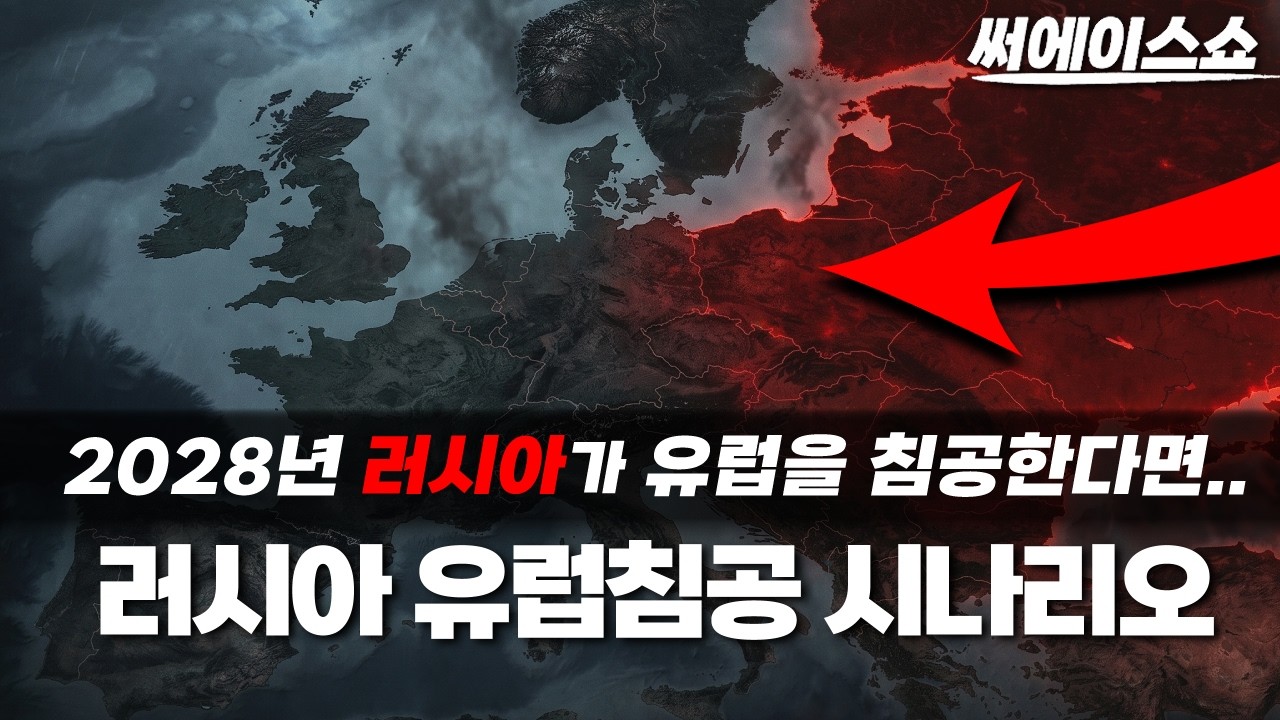
Amidst this, Carlo Masala, the Deputy Director of the NATO Defense College Research Institute, has published an interesting book. The title is "If Russia Wins." It's a book that speculates on the scenarios that would follow if Russia were to win the war in Ukraine. In the first stage, Russia would invade one of the Baltic states to test the cohesion of the NATO alliance.
If NATO upholds the principle that all members will come to the aid of an attacked ally and declare war on Russia, Russia would withdraw without hesitation, saying "Sorry, it was a mistake." However, if NATO hesitates out of fear, the book posits that Russia would proceed to the next stage.
The final stage is intriguing. The author suggests that since even the United States would find a two-front war against a superpower difficult, China would align with Russia and play its hidden card when Russia plays its decisive one. I was surprised by the author's assertion that this hidden card would not be the invasion of Taiwan, which everyone expects, but rather an attack that would "sweep through the Philippines." However, I was not greatly shaken as it was a move I had somewhat anticipated.