
Is Tap Water Safe in the Philippines? — Filter and Water Jug Costs, Plus Maintaining a Water Softener
In one line
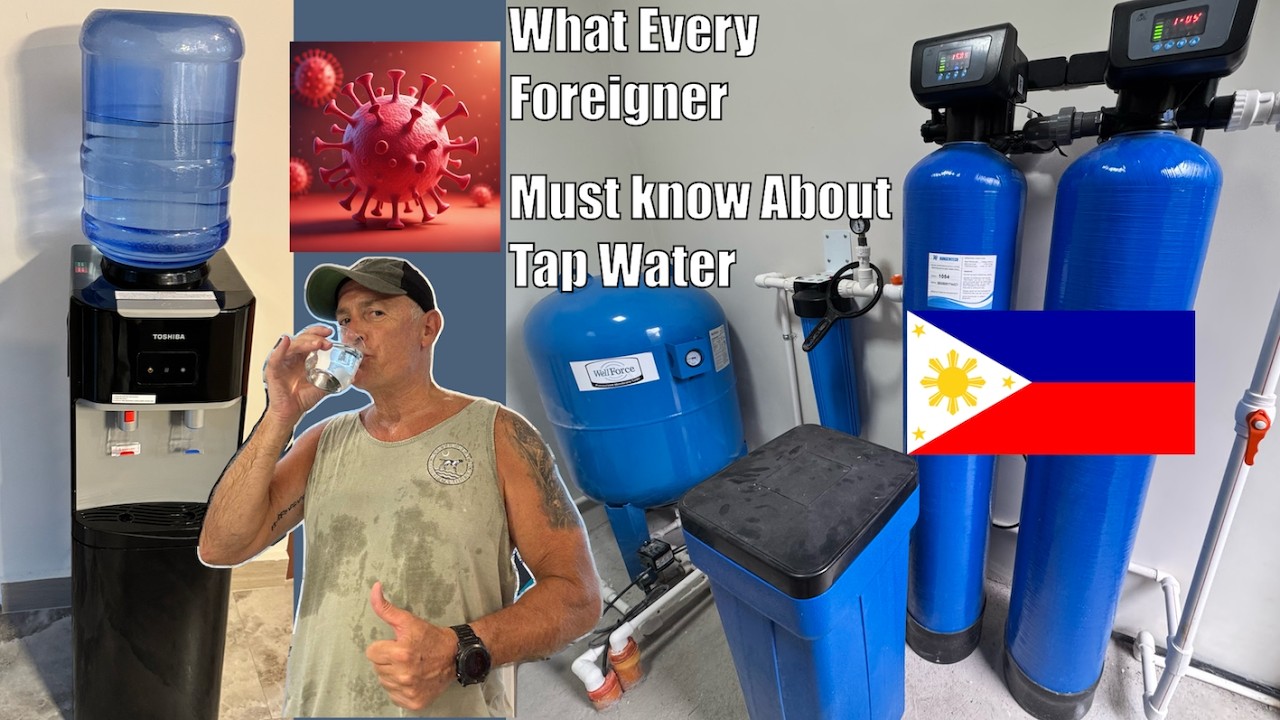
An American living in Angeles explains why Philippine tap water can be unsafe, the options and costs for drinking water, how hard water damages a house, and how he maintains his water softener and what it cost.
💡 Key takeaways
[Why tap water can be unsafe]
• The host thinks most Philippine tap water should not be drunk as is. Clear and good-tasting doesn't mean safe, he says.
• Water from treatment plants in big cities is treated, but he says it can be contaminated in the pipes on the way to homes because groundwater is polluted by poor septic systems and sewage, and frequent outages and pressure drops let it in.
• Rural areas often lack testing and treatment and rely heavily on well water.
• Data the host cites from the Philippine Statistics Authority and Department of Health: about 6,000 Filipinos die each year from waterborne illnesses.
• He's heard tap water in most of Davao is fine to drink, and maybe some areas of Manila, but says it's hit or miss.
• Drinking unfiltered tap water on vacation could ruin your whole trip, he warns.
[Drinking water options]
• The host believes pitcher filters like Brita don't remove bacteria or viruses.
• Under-sink reverse osmosis (RO) units start around 15,000 pesos and run up to about 50,000–60,000 pesos.
• A decent whole-house RO system costs a few thousand dollars, and filters need frequent changes. If your water has lots of sediment, you may need a separate pre-filter so the RO filters don't clog.
• The most common option is purified water jugs: about 25 pesos per refill, with an initial deposit of about 200 pesos per jug.
[Problems hard water causes]
• Whether from the city or a well, your water is likely hard water containing calcium and magnesium.
• It stains glass shower doors and floors, makes laundry stiff, and dries out skin.
• It corrodes shower heads and fixtures, causes dishwasher problems, and builds lime on instant water heater coils, hurting performance and possibly shortening their life.
[Softener maintenance]
• His softener uses resin beads that capture calcium and magnesium, and a brine tank flushes the system automatically once a week.
• He adds 3 scoops of salt to the brine tank every week.
• The polypropylene sediment filter should be changed every 3–6 months per the manufacturer (or when it's discolored or flow drops). Filters cost about 50–100 pesos each.
• Before changing the filter, he shuts the main valve and opens the outside spigot to drain the water.
• The softener does not remove bacteria or viruses. It only softens the water and removes sediment.
• He keeps an underground cistern (about 1,200 gallons) as a backup, but after letting it run dry the pump stopped working and he had to call someone to fix it.
[Softener costs and where to buy]
• A softener without automated heads is about 60,000 pesos; with automated heads about 70,000–75,000 pesos.
• Softener salt is about 500 pesos for a roughly 50 lb bag. In a comment reply he said he used almost one full bag in 6 months.
• Salt and filters are available from the installer, and filters are also sold on Amazon, Lazada and similar sites.
⏱ Chapters
00:00 Is tap water safe?
01:00 Waterborne illness data and causes of contamination
04:26 Water treatment — reverse osmosis
05:08 Purified water jug prices
06:34 Understanding hard water
09:00 Home water softener system
12:45 Filter change and maintenance
15:21 Softener and salt costs
💬 What viewers said (101 comments)
• Many said Brita isn't enough and advised adding UV sterilization to kill bacteria.
• Several worried about whether refill jug water is trustworthy and said they check it themselves with test kits.
• Some shared that refills are cheaper in their area, and others said they never drink water without an intact seal.
A UV filter is one of the only things that kills bacteria too small for 3- or 5-stage filters — that's why people get sick. Multi-stage filters and softeners make water clear and tasty but won't get rid of E. coli and the like. Don't trust any salesman there. If you go RO or 5-stage, add UV too. Just my experience.
In my area I don't know anyone, local or foreigner, who drinks or cooks with tap water. Filipinos here all use purified bottled water.
How long does a bag of salt last with normal use?


Comments 0
Please log into write a comment.