
Offshore Financial Advisers Targeting Expats in the Philippines — Commissions, the Surrender Trap and Red Flags
Host Andrew, who has lived in the Philippines for over 15 years, explains how offshore financial advisers who approach expats at events like those in Manila make their money, what products people get locked into, how to avoid them, and what to do if you're already in. It is mostly his experience and opinion — he calls it 'financial self-defense', not financial advice.
💡 Key takeaways
[The opening case]
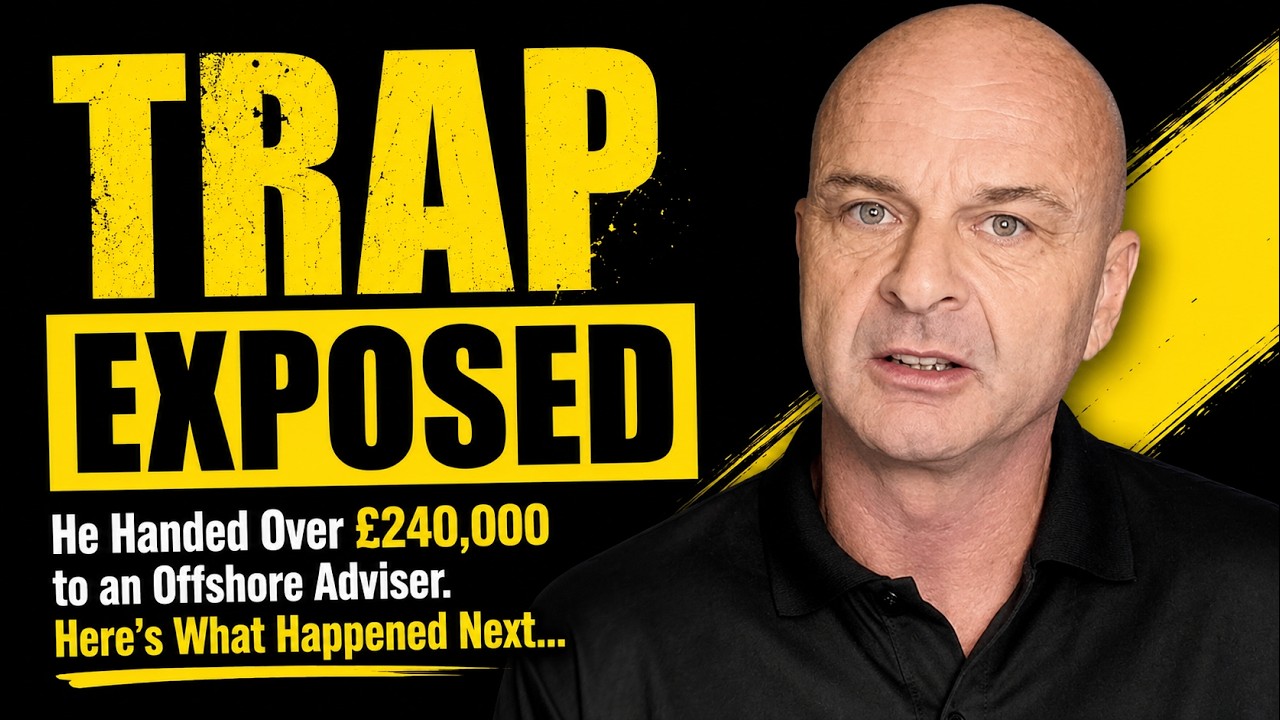
• A retired engineer new to the Philippines handed his £240,000 retirement pot, 38 years of savings, to an adviser he met at an expat networking event in Manila, the host says.
• The product had a 25-year surrender period and annual charges of about 3%, and the adviser took over £30,000 in commission on signing day.
• He found out about the commission by accident two years later; the product still has 21 years to run.
[How the business works]
• The offshore expat advice market runs mostly on commissions paid by product providers rather than fees paid by the client, which creates an incentive to sell high-commission products, he explains.
• Common products: portfolio bonds and regular savings plans (Friends Provident, RL360, Zurich International, Generali, etc.). Not fraudulent in themselves, but the cost structures often work against the client.
• Typical costs the host cites: 1–1.5% a year initial charge for the first 18 months, ongoing annual management fee of about 1.5–2%, surrender penalty of up to 8% in early years, mandatory terms of 10, 15 or 25 years.
• Adviser commission of 5–8% of the total investment, paid upfront on signing day — £10,000–16,000 on £200,000. Many offshore jurisdictions have no legal duty to disclose it.
[The surrender trap]
• Put in £200,000 and exit in year 3 of a 25-year contract and you may face an 8% penalty — £16,000. With some products you get back less than you paid in the early years.
• The UK, Australia, the US and Canada regulate adviser qualifications and commission disclosure, but you leave that protection behind when you move abroad. Legal remedies can be limited, costly and in another country's jurisdiction.
[Red flags]
• You met through a social event or referral (expat clubs, networking events, Facebook groups, word of mouth).
• They stress how well they understand the expat situation — a sales technique, not a qualification.
• They can't or won't give a clear written breakdown of every fee, commission and penalty before you sign.
• The product has a long lock-in (25 years for a man in his late fifties is unusual).
• They discourage a second opinion — the clearest signal of all, he says.
[What good advice looks like]
• Full fee and commission disclosure upfront without being asked, and verifiable qualifications from a recognised regulator.
• They encourage you to take time and get second opinions, and put recommendations in writing with reasons.
• Commission-based is fine if the amount is disclosed. The host recommends Jamie Lee, a friend of 30 years.
[If you're already in]
• Get an independent assessment and compare in numbers the cost of staying versus the cost of exiting.
• If you think you were mis-sold, get advice on whether you have recourse (depends on where it was sold and the regulatory framework).
• This week, pull out your paperwork, find the fee schedule, surrender terms and any commission disclosure, and get an independent second opinion on anything unclear.
⏱ Chapters
00:00 The real cost of bad financial advice
02:47 How commission-based advisers operate
05:25 The surrender trap
09:02 Red flags you need to know
11:25 What good advice looks like
13:52 Action steps if you're already trapped
💬 What viewers said (21 comments)
• One viewer said the host should disclose in the video whether he gets a referral fee for recommending Jamie Lee; the host replied he receives no fee and they are 30-year friends.
• Viewers shared that many scams also run through religious groups and nonprofits.
• Asked whether it's better to avoid advisers altogether, the host said DIY investing is cheapest for the financially savvy, but others are probably better off with a professional.
Good video with many valid points. At retirement I plan to keep my money in a UK bank account as I'm very risk-averse. My only issue was the mention of your adviser Jamie Lee — I hope you disclosed somewhere that you get a referral fee, as my own adviser pays me commission for referrals and that's normal practice.
Hi Andrew! Isn't it more reliable not to get involved with any 'product' or adviser at all? I believe silver bought and stored at BullionVault (1.25% a year) is safer than any offshore adviser — no surrender penalty and you can sell back any time. And why did the expat in the story hand over all his money? Was he promised big gains?
Awesome video. A lot of scams are also done through religious groups.
Another great video. I've had some initial email exchanges with Jamie and, having worked in senior finance for years, I've been impressed by his professionalism. I suspect many prospective UK expats bury their heads in the sand on financial planning, tax residency and the practicalities of moving abroad.


Comments 0
Please log into write a comment.