
Healthcare planning for expats over 60 in the Philippines — international insurance, contingency fund, hospital costs and a yearly budget
In one line
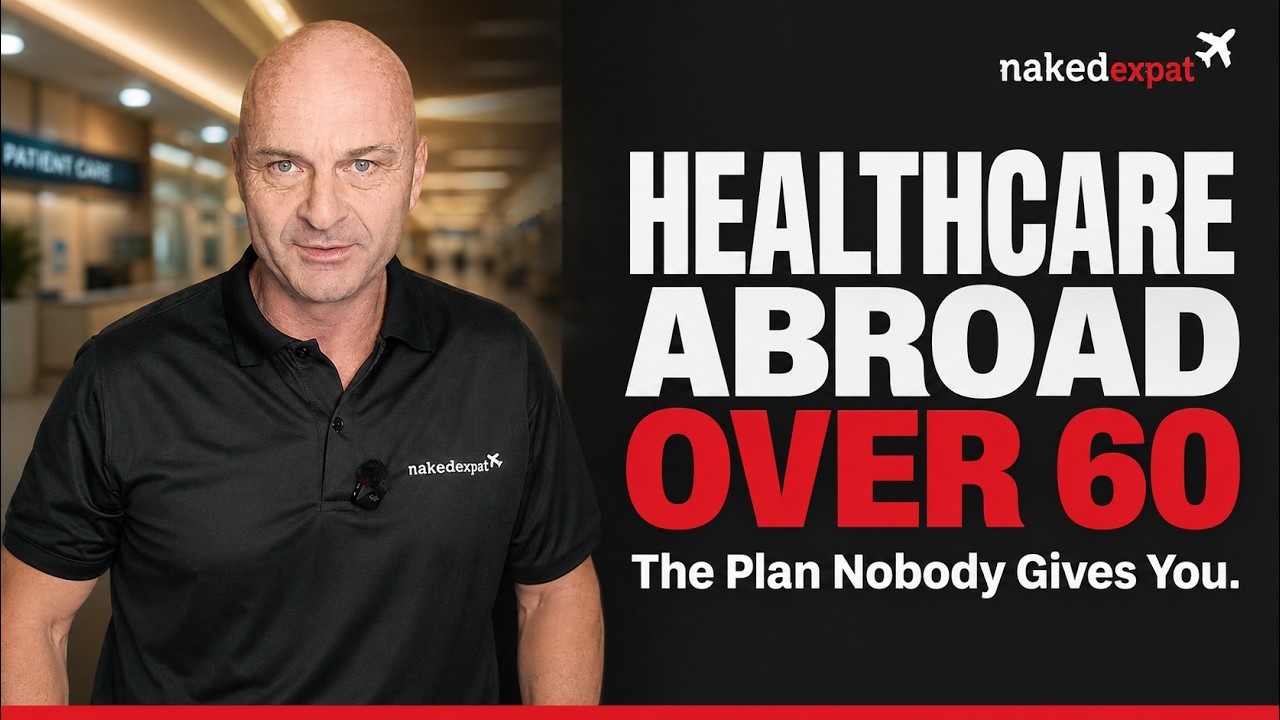
A British host who has lived in the Philippines for over 20 years breaks down the healthcare planning you need after 60 into international insurance, a contingency fund, a decision document, and dental and optical, then walks through hospital costs and a yearly budget.
💡 Key takeaways
[Why 60 is the turning point — host's view]
• From 60, international health insurance premiums rise sharply at each renewal, underwriting gets stricter, and pre-existing conditions start being excluded, he says
• At 65 the choices narrow further, and at 70 standard providers' policies become too expensive or hard to get, in his view
• The idea of 'flying home for treatment if something serious happens' becomes harder to rely on as you age, he says
[Hospitals in the Philippines]
• Top private hospitals in Manila: Makati Medical Center, St. Luke's Medical Center (Bonifacio Global City and Quezon City), The Medical City, Asian Hospital — he sees them as comparable to mid-tier private hospitals in the West
• Angeles and Clark: Premier Medical Center, Angeles University Foundation Medical Center, Clark Medical City — fine for most standard care, but for complex cancer or heart surgery you need to go to Manila, he says
• Manila is manageable from Clark, but a real burden from Cebu, Davao or remote areas, he says
• At the top end the issue is cost, not quality, he says
[Hospital costs — approximate, from auto captions]
• Specialist consultation about 3,000–5,000 pesos
• Private room in a top Manila hospital about 15,000–30,000 pesos a night (treatment extra)
• Cardiac intervention about 2–4 million pesos, cancer treatment more
• Medical evacuation to Singapore, Bangkok, Hong Kong or home can cost about 50,000 US dollars or more in complex cases
[PhilHealth (Philippine national health insurance)]
• Holders of the SRRV retirement visa or 13A visa, among others, can join, he says
• It helps with minor and mid-level care in public hospitals, but limits are low and claiming as a foreigner is cumbersome, so treat it only as a supplement, he says
[Four-layer plan — host's suggestion]
• Layer 1, international health insurance: check it covers inpatient care, specialists, imaging, surgery, cancer treatment and emergency evacuation
• What to check: annual limit, sub-limits per condition, pre-existing exclusions for your own history, renewal guarantee regardless of claims, and whether the US is included (excluding it lowers the premium)
• He recommends a specialist international health insurance broker rather than going direct to one insurer (he points to an enquiry form on his own website)
• Layer 2, medical contingency fund: at least 25,000 US dollars, separate from general savings, in an account you can access quickly
• Layer 3, decision document: decide where you'd be treated and who decides if you're incapacitated, and put insurance papers, medical history, medications and emergency contacts in one document shared with someone close
• Layer 4, dental and optical: international insurance usually excludes or heavily limits them. A crown is about 15,000–25,000 pesos, an implant more
[Medications]
• Most Western medicines are available as branded or generic products, and the generic market is wide, he says
• Some newer or specialist drugs are hard to find or expensive, so check before you move and set up a regular pharmacy and GP, he says
• For drugs not available in the Philippines, budget for bringing supplies from home or using international pharmacy services
[Yearly budget — host's estimate]
• International premium (male 60–65, non-smoker, no major pre-existing conditions) about 2,500–4,500 US dollars a year; over 65 about 3,500–6,000 US dollars or more
• Dental and optical about 10,000–15,000 pesos a year
• Chronic-condition medication at least about 5,000 pesos a month
• Out-of-pocket GP and specialist visits about 15,000–20,000 pesos a year
• Total about 4,000–6,000 US dollars a year (premium, routine care, dental and a share of the contingency fund)
[Without a plan — a common pattern he has seen]
• Someone arrives healthy in their late 50s or early 60s, puts it off, and a few years later a heart problem or cancer exceeds the policy limit — then they burn through savings, go home, or delay treatment, he says
[Five things to do now]
• Read your full insurance policy this week
• Sort out cover if you have none or only travel insurance
• Build the 25,000 US dollar contingency fund
• Create one medical information document
• Talk with someone close about your treatment preferences
⏱ Chapters
00:00 Why 60 is the turning point
02:33 The real problem — insurance market, health risk, relying on home
05:46 Hospitals in the Philippines and costs
09:12 The four-layer plan
15:30 Prescription medications
17:08 Yearly healthcare budget
19:50 What happens without a plan
21:30 Five things to do now
💬 What viewers said (26 comments)
• A commenter said UK expats who tell HMRC they live abroad lose free NHS treatment if they go back; the channel owner replied you need to register with a GP on return and be ready to prove you've moved back 'permanently'
• One viewer noted premiums jump 40% or more at each 5-year age bracket, so put aside more now, and that a fixed 25,000 US dollar fund may not be enough without a steady income stream
• People shared being priced out of insurance at 70 after a heart attack, and a case of someone unable to afford surgery in the Philippines
• To a suggestion to fly to Bangkok for anything serious, the channel owner replied that Bangkok or KL are both good options
Good information. But when budgeting, look beyond your current age: premiums typically jump 40% or more when you enter a higher age bracket, often in 5-year blocks (61-65, 66-70...), on top of yearly medical inflation. A simple approach is to set aside more now to cover later jumps — e.g. if 61-65 costs 3,000 USD a year and 66-70 costs 5,000 USD, budget 4,000 a year throughout. Also, a fixed 25K USD contingency fund may not be enough over a couple of decades, and medical inflation will erode it; pairing it with a passive income stream lets it be replenished after you draw on it. Not an expert — do your own due diligence.
There's a LOT to take in here — it's hurting my brain 😂


Comments 0
Please log into write a comment.