
3 Things to Know Before Building a House in the Philippines — Land Eligibility, Money Transfers, Choosing a Builder (An Angeles Retiree's Experience)
In one line
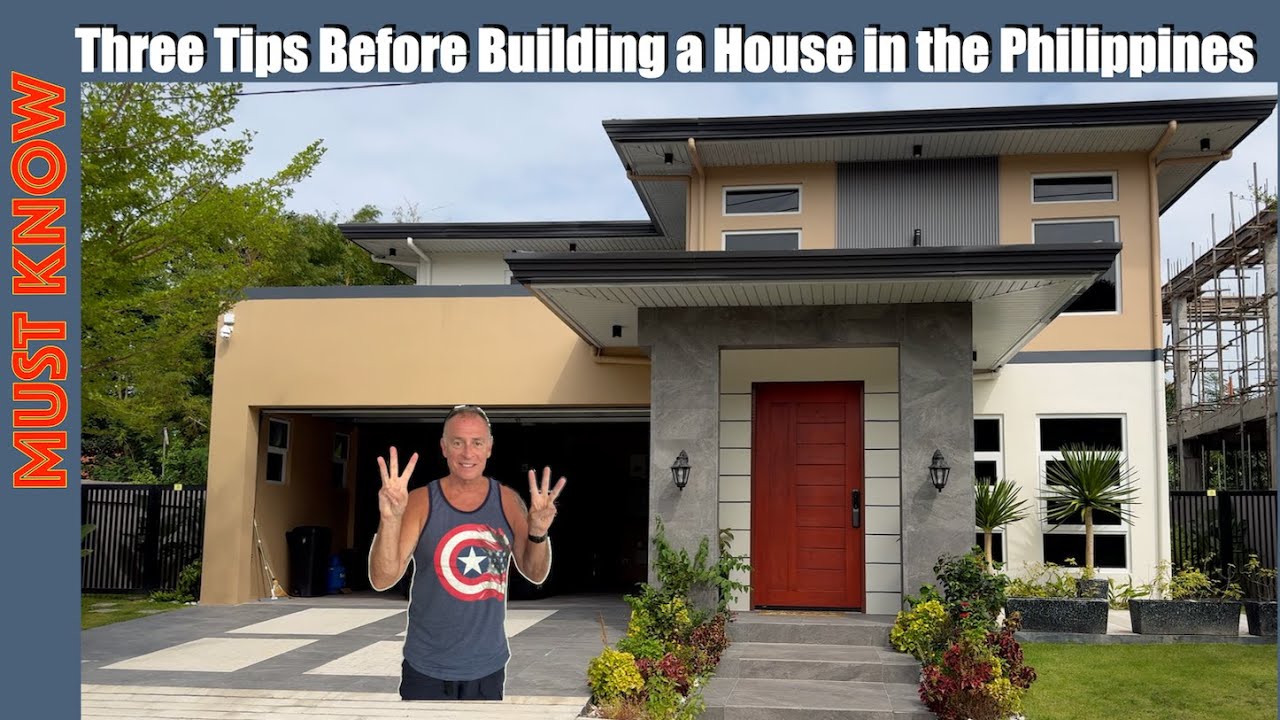
A US retiree who just finished building a house in Angeles shares a pre-build checklist drawn from his own mistakes. He covers land-ownership eligibility, budget and land disputes, how to move money, choosing a builder and architect, and alternatives for foreigners.
💡 Key takeaways
[Land-ownership eligibility]
• Only Filipino citizens can own land in the Philippines.
• Filipinos naturalized abroad lose some rights, such as voting, and face limits on how much land they can own. He recalls about 1,000 sq m in urban areas and about 5,000 sq m in rural areas, but says he may have them backwards.
• His wife reacquired her citizenship at the Philippine Embassy in Washington, D.C. He thinks the law dates from around 2003. She submitted a short form with her expired Filipino passport, birth certificate, marriage certificate and a few other documents, and he says it was very simple.
• Their daughter, then a minor (about 15), was added to the same form at no extra cost. He says this avoids legal problems if he wills the property to her later.
• He knows several naturalized citizens who bought land without reacquiring citizenship, and it was rarely raised. Still, reacquiring helped them open a bank account.
[Budget and land disputes]
• Match where you want to live (e.g., Bonifacio) with your budget. He advises against choosing remotely and suggests spending time in several areas first.
• Land disputes are rare in established subdivisions but very common in the province. Whether you inherit or buy land there, he recommends a lawyer who specializes in land.
• Example: about 6–7 years ago he saw a nearly finished house on a beach in Samar. He later heard that a foreigner had bought the land and built the house, then a local proved the land was his, and the foreigner lost everything he had put in.
• Even if you win in court, you still have to live there, so think about relations with your neighbors.
[Money transfers and bank accounts]
• He uses an international wire from his US bank to a Philippine bank. The fee is about $25 with no limit, and it takes about 10 minutes by phone. He has done it about 10 times.
• It is simple only when both accounts are in the same name. If the names differ, more paperwork is needed.
• Apps such as Wise, Western Union and Xoom charge about $50 or more to send about $5,000, and the fee rises as you send more.
• Requirements to open an account: foreigners need proof of long-term stay, such as an SRRV (retirement visa) or an alien registration card (he calls it 'ARC'). His Filipino-born wife was asked for a Filipino passport or ID, or her reacquisition papers.
• They opened the account in his wife's name first, and he was added after getting his SRRV. Rules vary by bank.
[Builders and architects]
• You get what you pay for. Hiring a relative's acquaintance can be risky.
• He interviewed several builders and checked their reputations with other expats. He chose a licensed builder who is also an engineer, signed a contract and got a 1-year warranty.
• Building costs in Angeles run about 20,000–50,000 pesos per sq m. His house averaged about 35,000 pesos per sq m.
• Contracts are either all-inclusive (uncommon) or hybrid, with some items marked 'owner purchased, contractor installed'.
• For a small house with existing plans, an architect may not be necessary. For a multi-story or costly house, he recommends an architect, with plans reviewed by a structural engineer, a master plumber and an electrician.
[Alternatives if you can't own land]
• You can rent, buy a condo, or lease land long-term and build on it.
• Shipping-container homes are spreading in the Philippines too, and they can be moved by truck later.
• He says a recent law change lets foreigners lease land for up to 99 years (previously 50). Check this before signing.
⏱ Chapters
00:00 Introduction
01:04 Citizenship and land rules
04:12 Budget and land disputes
07:16 Money transfers and bank accounts
10:35 Choosing a builder and architect
13:27 Alternative housing for foreigners
💬 What viewers said (108 comments)
• Many new subscribers arrived from another channel's interview, and many praised the house.
• The host answered questions about building permits, insulation, garage doors and total cost. He named his subdivision as Plantation Hills.
• Local tips included getting a clean individual title (avoiding mother titles) with surveys done, hiring an architect, and Western Union transfer limits.
• Some shared experiences of disappointing build quality and Manila's traffic.
I always recommend getting an architect. You pay extra upfront, but it can save a lot of money and stress in the long run, especially for bigger builds. Architectural plans are also required for a building permit, on top of other permits. Many architects/contractors handle these for you. There's more red tape in the Philippines than mountains and beaches — take it from a Filipino.
I'm a Marine veteran in Northern Virginia, married 30+ years, and looking for places to retire in the Philippines; my wife is from Negros. I was there for Christmas and realized I won't move to BGC as I first thought. The traffic was unbearable, and I need a yard and green space.
What subdivision and location in Angeles City is that?


Comments 0
Please log into write a comment.