
After the shooting of a Korean tourist in Angeles — suspect arrest status, crime exposure by nationality, and safety tips for travelers
In one line
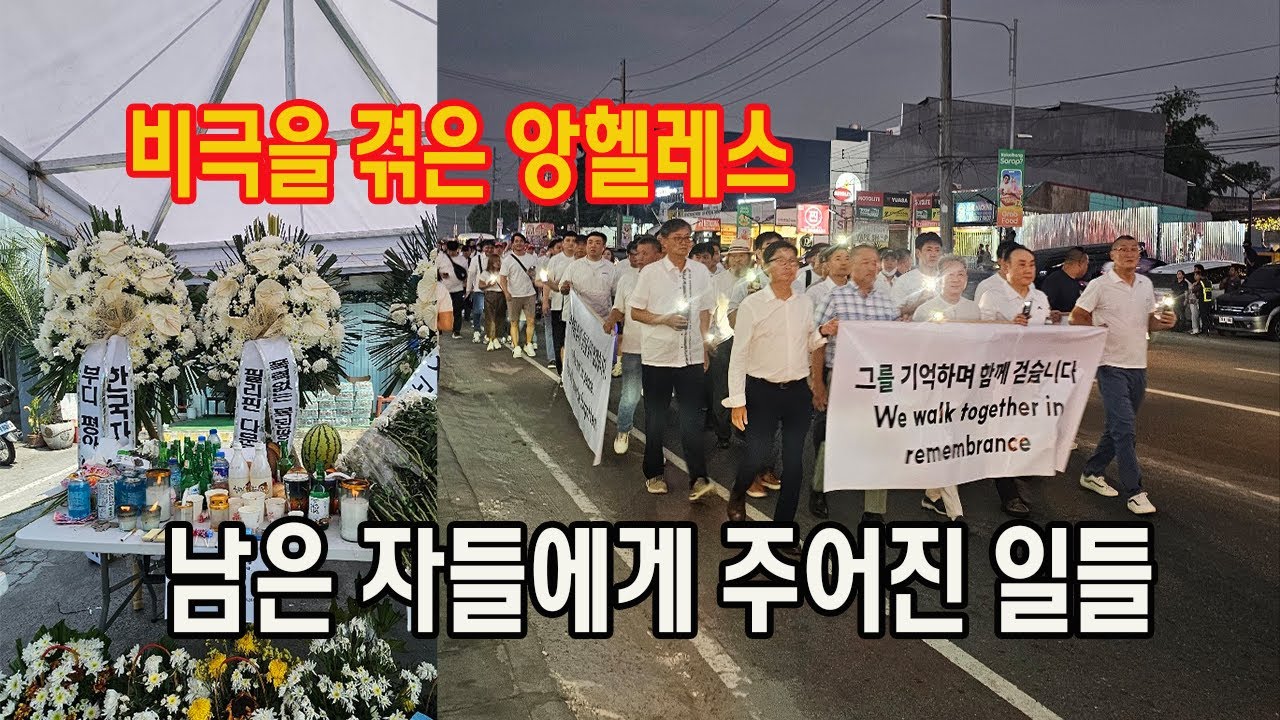
A Korean expat YouTuber living in Angeles looks back at how people responded after a Korean tourist was shot dead in April. Comparing the US, Japan and China, he points out that Korea has no system for joint investigations, and he advises travelers to use package tours and get around by car.
💡 Key takeaways
[The incident and the investigation]
• In April 2025, a Korean tourist was shot dead in broad daylight in Angeles.
• Two suspects fled to Manila. One of them, the driver, has been caught. The shooter is still being tracked, he says.
• Angeles Mayor Lazatin put up a bounty and ordered all police resources mobilized for the arrest. The host believes the Korean association's efforts also mattered a lot.
• On April 26, more than 1,000 Korean residents held a memorial march in Korea Town.
[Angeles City's response]
• Since last peak season, the city has run checkpoints 24 hours a day in vulnerable parts of town.
• Because many crimes are said to come from outside the city, checkpoints were also set up all along the city boundary, he says.
[Statistics cited by the host]
• 34 Koreans have been killed in the Philippines over the past 20 years. The host says most cases involved residents in business disputes, and this is the first time a tourist was the victim.
• Over the past 4 years, Koreans had the third-highest number of victims in the Philippines, after China and Japan. In the same period, Korean visitors numbered about 3.61 million, ranking first. Americans came second at about 2.38 million.
• By the host's rough calculation, about 0.08% of Koreans were exposed to crime. The rate for Chinese and Japanese visitors was more than 10 times higher. The host himself adds that the figure may not mean much.
[What other countries do — host's research]
• US: When Americans are targeted, embassy staff and dispatched police investigate directly with the Philippine police. According to US embassy staff he spoke with, the US also pays investigation funds to the Philippine police.
• Japan: It decided to give the Philippines security aid free of charge for the first time, about 2 billion yen, and is reviewing further agreements.
• China: Based on a security agreement signed under the Duterte administration, it intervenes directly in cases involving its citizens.
• Korea: There is no security or safety agreement. The Korean police attaché also has no direct investigative or joint-investigation authority, he says.
[Steps Korean police must go through to catch a suspect — host's explanation]
• First, contact the NBI.
• The NBI consults with the justice side. Once approved, a cooperation letter goes to the CIDG (CIDG involvement is required because the crime involves a foreigner).
• If the suspect is Filipino, the PNP must join too.
• All three agencies have to coordinate and set a time, so arrests are delayed, he says.
[Safety tips for travelers and residents — host's advice]
• Public transport is poor, so rather than heading off on a free-and-easy trip, use a hotel or travel agency package. You'll carry less cash, and a car is always arranged.
• Illegal lodgings can't respond properly when something goes wrong.
• Showing off that you have money raises the risk.
• Residents should cut out illegal practices and hire security guards, even if it costs money.
• The host says blaming the victim is wrong. The ones to blame are the criminals and the system that fails to stop them.
⏱ Chapters
00:00 The April tragedy and one suspect arrested
01:00 Statistics on Korean victims and Angeles checkpoints
02:01 The first tourist victim and the April 26 memorial march
03:02 Causes of crime and criticism of victim-blaming
04:04 Visitor numbers and crime exposure by nationality
05:05 How the US, Japan and China respond
07:07 No Korea–Philippines agreement and the joint-investigation steps
09:11 Safety tips for travelers and residents, and what he asks of the government
💬 What viewers said (153 comments)
• Many said the Philippines should be designated a travel-ban country, or that people should simply not go.
• There were rumors that the arrested suspect was 'fake'. The host replied that he is the real driver and that the shooter is still being tracked.
• Viewers shared experiences of robbery, pickpocketing and taxi overcharging in Angeles, along with advice to get around by Grab.
• Opinions split over the 'semi-independent travel' advice: some said they'd rather not go at all, others said safety comes first.
Every point is right. I hope there are no more victims — tourists, please always be careful and move by car no matter what. Once again, may the deceased rest in peace.
So are you saying we shouldn't travel independently and should use a travel agency instead?
Angeles is more dangerous than Malate or Chinatown in Manila. I just never reported it, but I've been mugged at the Petron intersection the day before flying home, pickpocketed under the SM bridge, and last year had my phone and wallet taken while walking from a BBQ place in Korea Town to a mart. I've been coming to the Philippines for over 10 years and only had trouble in Clark/Angeles. Walking inside Friendship Korea Town at night is suicidal — take a Grab. If it's your first time in Angeles, hotels in front of or behind ABC Hotel are safer than Korea Town: more people and cars at night, and you see police now and then.


Comments 0
Please log into write a comment.