

Stages of Self-Employment in the Philippines: A Breakdown.
In the Philippines, even convenience store employees need a college degree. This often leaves ordinary citizens with no choice but to pursue self-employment.
This path involves several stages, starting with a simple street stall.
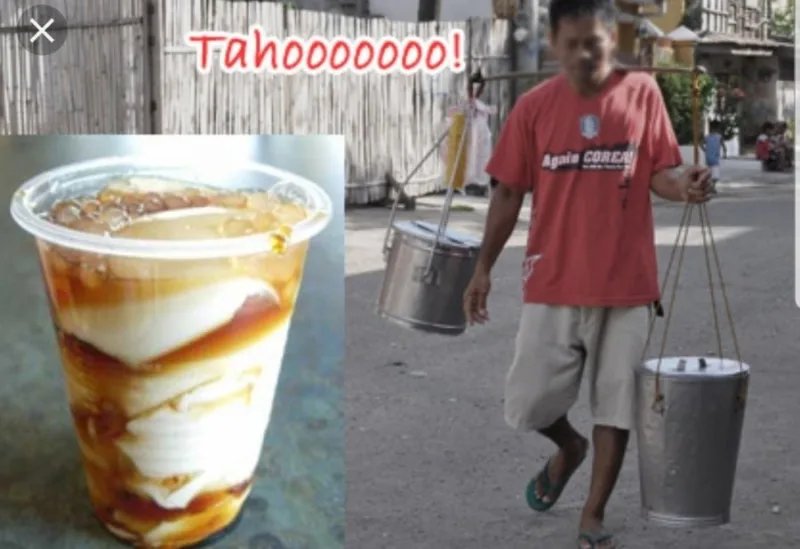
The most common item sold is a silken tofu pudding called 'taho'.
Vendors walk through neighborhoods shouting "Taho!" to attract customers, and it's no easy job. They have to make the tofu from scratch before dawn and prepare a syrup from brown sugar. Adding tapioca pearls completes the taho.
As seen in the photo, they carry stainless steel containers. They also tie and sell chicharon, a fried pork rind snack, to their containers.
With just a stainless steel container and plastic cups, you can start this business with about 50,000 KRW.
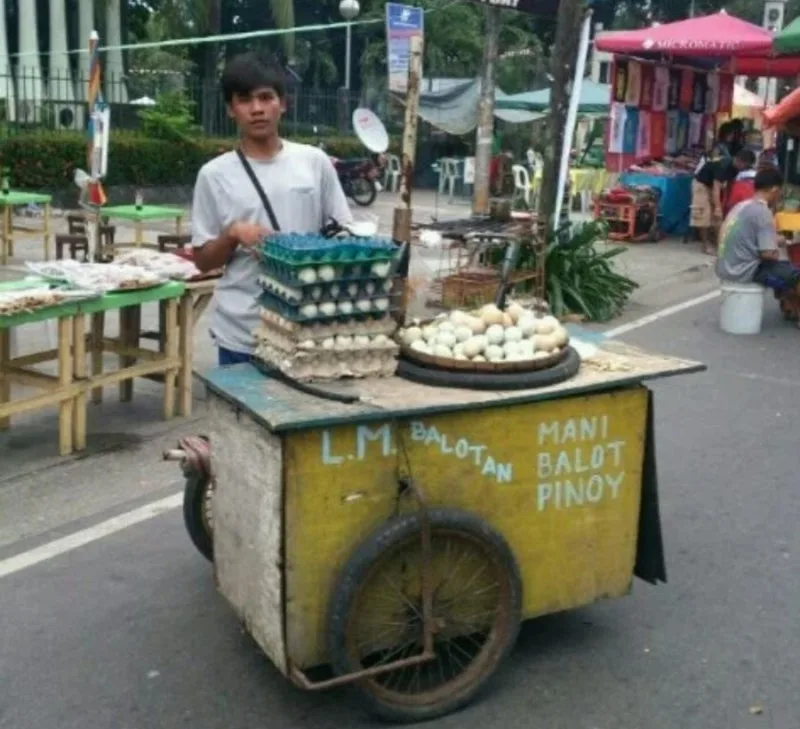
Once they save a bit more money, they can upgrade to selling 'balut', a partially incubated duck egg. While this is physically less demanding, it introduces the concept of location. Savvy vendors might even sell in the middle of a busy intersection on a traffic island during rush hour.
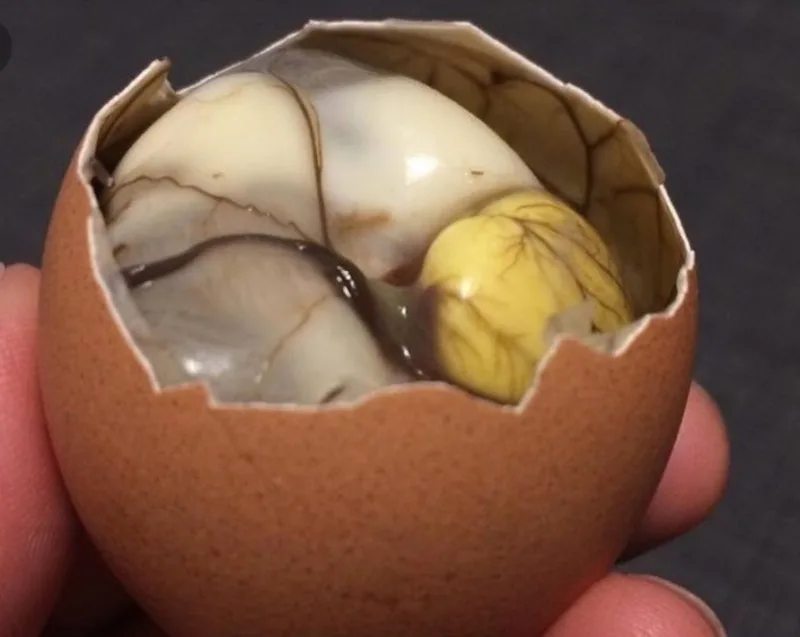
Balut might be unappetizing for Koreans, but Filipinos of all ages absolutely love it. Balut can also be sold by walking around, similar to taho.

A similar level of self-employment involves selling fried fish balls. Customers can choose from various dipping sauces, making hygiene a secondary concern. Sometimes, they also sell deep-fried chicks, which, along with balut, are considered two of the most unappealing foods in the Philippines.

With a little more savings, they can expand their stall, typically by setting up charcoal grills to sell various barbecued skewers. It's always a mystery how they manage unsold inventory, given the large quantities prepared.
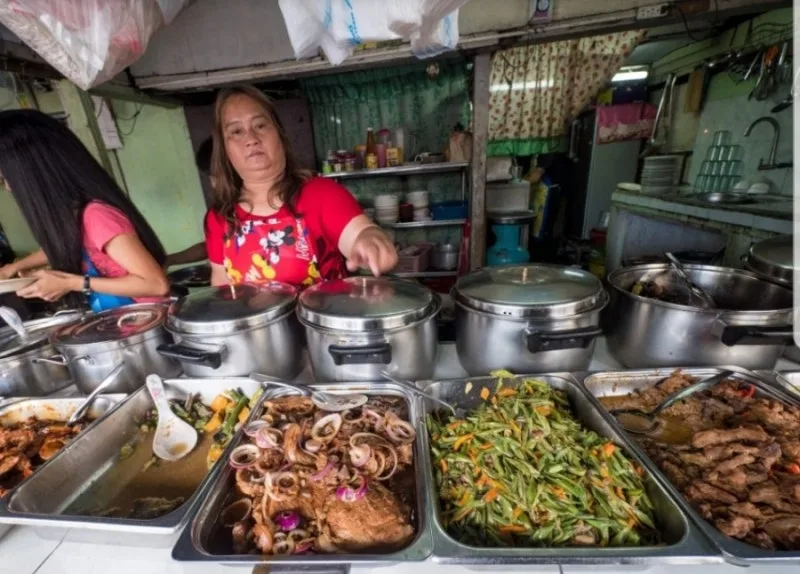
These are the common street food stalls for ordinary people, with very meager incomes, just enough to get by.
However, some talented individuals manage to move to the next stage.
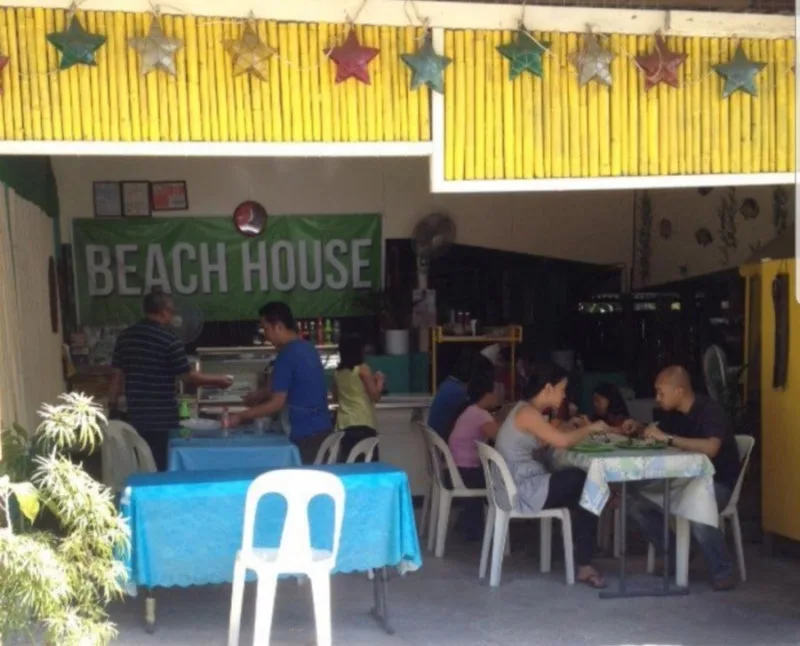
This next step is a roadside eatery called a 'carinderia'. These can be run from home or by the roadside, and startup costs are around 15,000 pesos, or about 300,000 KRW. From this point, a barangay permit is required.
They typically offer about 10 simple dishes like adobo or kare-kare, sold using the 'Turo Turo' system. Turo Turo means 'point point' in Tagalog, and most customers order a single adobo with rice, costing around 50 pesos, or 1,000 KRW.
Business becomes more complex at this stage, requiring daily trips to the wet market to purchase fresh, affordable ingredients. Lazy individuals might prefer to stick with selling balut, and not many people make it this far.
If they work diligently, they can accumulate capital and then transition into one of two businesses: a 'cantina' if they have excellent cooking skills, or a 'sari-sari store' if they prefer a more relaxed pace.
These ventures require a security deposit and monthly rent, often supplemented by help from relatives working abroad, known as 'ate' and 'kuya'.
For those who skip the earlier stages, an uncle working tirelessly in Korea might set them up, essentially a shortcut. This approach, however, has a higher chance of failure.
A cantina is an upgraded version of a carinderia, featuring a display case and tables. Those located near universities tend to do very well, with multiple cantinas forming popular food alleys.
Some Koreans also operate multiple cantinas, as it's a good way to gain experience in the Philippines with relatively low risk.
When a cantina is equipped with air conditioning, it moves beyond the basic cantina concept into a restaurant, often located in small malls or commercial buildings. Achieving great success here can lead to becoming middle class.
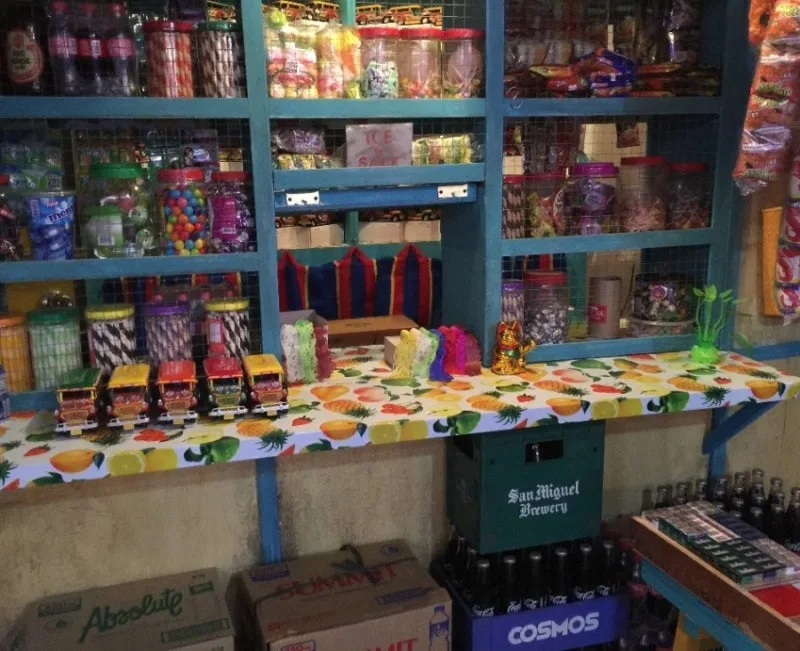
Sari-sari is Tagalog for 'various', and it's exactly that – a store selling a wide range of goods. They are cheaper than convenience stores but slightly more expensive than supermarkets. Most ordinary Filipinos buy their daily necessities here. Operating a sari-sari store is a dream for many Filipinos, but a dream that often remains unfulfilled.
Self-employment up to this stage is exempt from VAT, and only income tax is paid, which is usually below the taxable threshold.
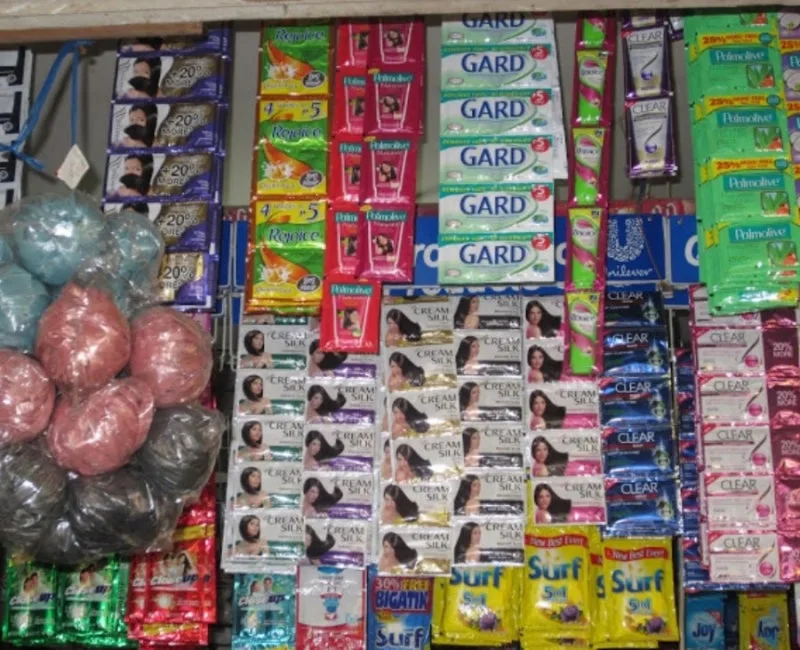
In sari-sari stores, you can find items from candy to shampoo sold in single-use portions, known as 'tingi-tingi'. This is similar to the small packs of cigarettes sold by newspaper vendors in Korea in the past. Due to poverty, many Filipinos cannot afford to buy items like shampoo in full-sized bottles.
It seems that Tagalog often uses repeated words. Examples include Turo Turo, Sari Sari, Tingi-tingi, Ihaw-ihaw (grilled food), Bolabola (playboy/flirt), Paruparo (butterfly), Maya-maya (a little later), and so on.


Comments 0
Please log into write a comment.