
Japanese cars hold 81% in the Philippines — why Korean and Chinese cars lag, plus EV price comparison
In one line
A Korean-Filipino couple living in Bacolod talk about the Philippine car market over lunch at a budget restaurant, then compare Kia, VinFast and Chinese car prices and build quality at an EV event the next day.
💡 Key takeaways
[Car market share in the Philippines — per the host]
• As of this year: Japanese 81%, Chinese about 8%, US 4%, Korean 3%, Vietnam's VinFast about 1.7%. That's 8 in 10 cars being Japanese.
• Why Japanese cars win: potholes cause frequent minor breakdowns, and Japanese cars can be fixed anywhere, with genuine and aftermarket parts easy to find (even online) and an active used market.
• The host thinks most people buy a Japanese car first and try Korean or American brands for a second or third car, because a first car must be fixed within a day if it breaks.
[Korean, Chinese, American cars — host's view]
• Korean: quality rivals Japanese, but the service network isn't as wide, local third-party shops struggle to fix them, maintenance costs more, and tariffs make them pricey. Thanks to Korea's good image, you do see more of them lately.
• Chinese: cheap and decent, but local online communities say "you'll grow old waiting for repairs" — the after-sales service is that bad.
• American: bought for style; high maintenance and inconsistent quality.
• An acquaintance's Geely broke down mid-road and was diagnosed with a broken transmission. The warranty was first approved, then denied; it nearly went to court, the car sat at the service center for 1–2 years, and he ended up getting rid of it.
[EV event prices — staff/price tags, in pesos]
• Nissan Navara Pro (plug-in hybrid pickup): about 2.76M
• Kia EV3 (full EV): about 1.9M, 204 hp. Back seat is tighter than an Innova.
• Kia Sorento Hybrid: about 2.2M / 2.6M / 2.9M (top trim)
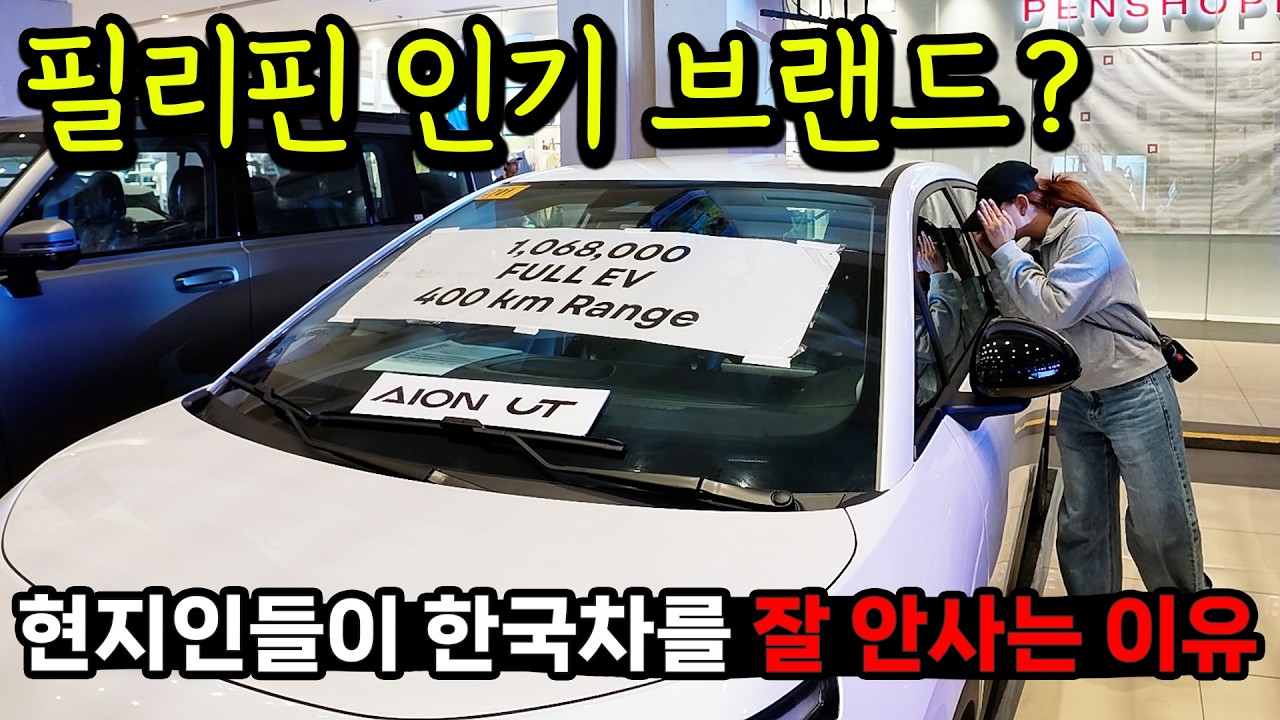
• Aion (Chinese): about 1M
• VinFast: about 1.6M — finish is noticeably worse than the Kia.
• Unnamed Chinese brand: about 1.5M (name shown in the video)
• BAIC hybrid 4WD: about 1.96M
• Jetour: about 1.96M — same price range as the Kia EV3.
[EV charging — watch out]
• Bacolod to Dumaguete is about 230 km, roughly 6 hours by car over the mountains.
• Staff said Negros has chargers at the event venue and in Dumaguete, but provincial towns like Kabankalan have few or none yet.
• So the couple think a hybrid or gasoline car beats a full EV in Bacolod for now. If they buy, it'll be a Toyota.
[Budget restaurant prices]
• A recently opened branch with indoor seating, fully packed at lunch (restaurant name shown in the video — subtitles spell it differently).
• Most meals are around 100 pesos; a rice meal was 98 pesos. Two rice meals, one noodle dish and two drinks totaled 421 pesos.
• Citron Americano (Americano mixed with yuja tea) was 130 pesos — with a Starbucks Tall Americano at about 150 pesos, drinks are pricey next to the food. The host thinks the rice meals are loss leaders and drinks carry the margin.
[Exchange rate]
• The peso-to-won rate was about 25 a few months ago and is now near 20 (as of filming).
• Sending 1 million won used to get the low 40,000s in pesos; now it's about 46,000–47,000 pesos, a big difference for people living on remittances from Korea.
⏱ Chapters
00:00 Almost every car is Japanese; budget restaurant
01:03 Market share and why Japanese cars are popular
02:06 Where Chinese, American and Korean cars stand
03:07 The food and the total bill
04:08 Peso exchange rate drop and remittances
06:10 EV event, Navara Pro
08:13 Kia EV3 and the charging problem
10:15 Sorento, Aion and VinFast compared
12:20 Chinese car prices and the Geely repair story
💬 What viewers said (43 comments)
• Most agreed that in the Philippines and Southeast Asia, Japanese cars — especially Toyota — are the practical choice because of maintenance and parts.
• Korean residents driving a Hyundai Stargazer or Starex shared repairs that dragged on for months.
• Other informative comments covered used BYD budget hybrid prices, EV owners who install solar and chargers at home, and VinFast's current status.
Tariffs make them expensive, plus repair costs, resale value and so on — that must be the issue.
A BYD pickup is over 2 million pesos (design and interior are nice...). I drive a Hyundai Stargazer and I'm seriously thinking of swapping to a Toyota Innova. It's just over 10,000 km, yet after a day parked outside it suddenly wouldn't start or the front AC wouldn't work (I always carry a jump starter). Parked indoors it's fine again, lol. Korean residents around me with Stargazers say repairs kept their cars off the road for 2 to 7 months, so they got fed up and switched to Japanese cars. Patriotism alone isn't enough with access to repairs this poor. (There's a rumor the Kia dealer in my area is pulling out.) Don't compare, just go Toyota. An Innova for the family and a Hilux pickup for other uses would be great. By the way, did you change phones? Z Fold 8?
Comments 0
Please log into write a comment.